


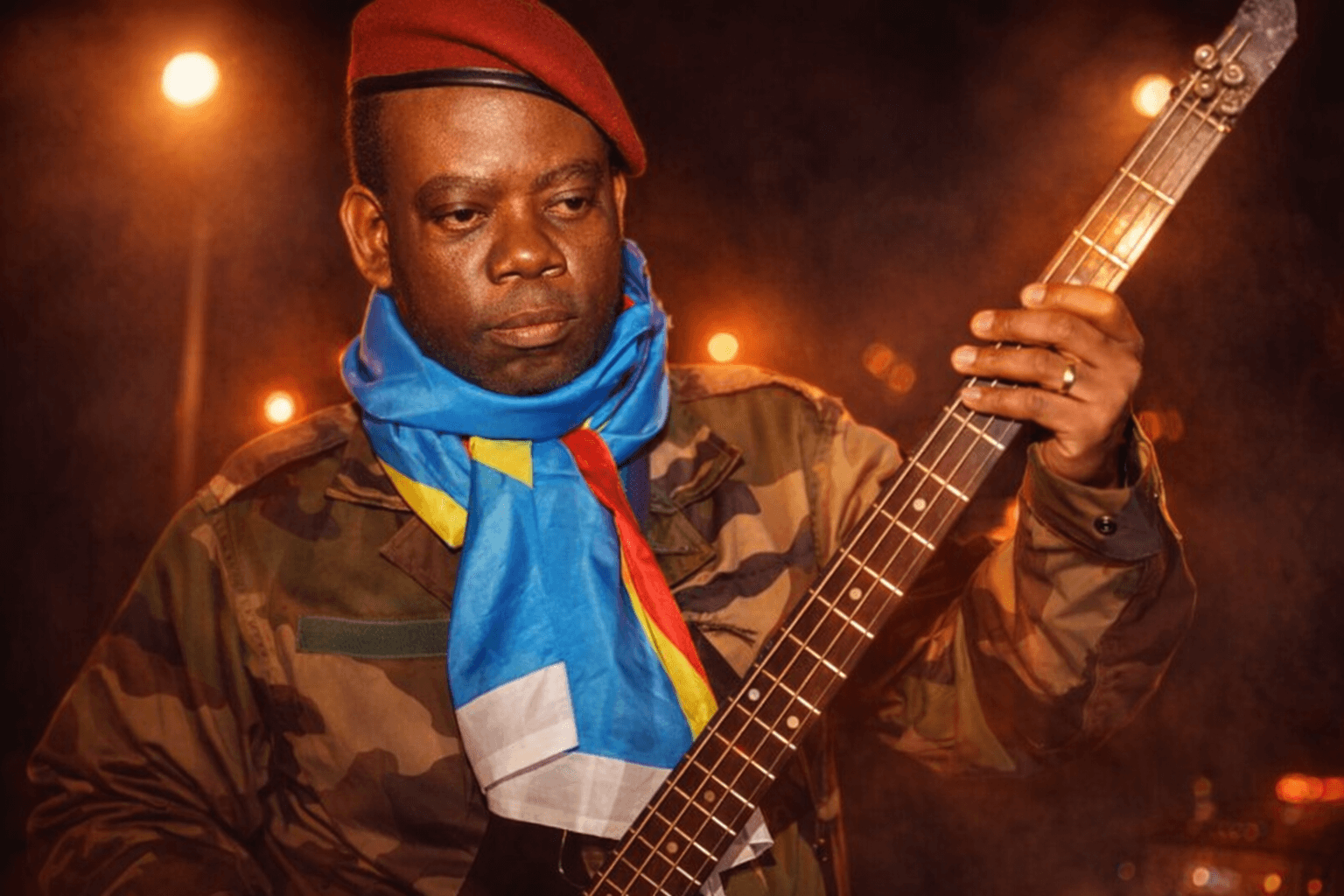
Gode Lofombo: Bass Legend of Empire Bakuba
Introduction to Gode Lofombo
Gode Lofombo, born Mbemba Ndombasi Gode, stands as one of the most respected bass guitarists, composers, and arrangers in the history of Congolese rumba, soukous, and Lingala music. Best known for his work with Pepe Kallé’s Empire Bakuba, Gode Lofombo helped redefine the role of bass guitar in modern Congolese music, transforming it from a background instrument into a melodic and rhythmic force. His influence spans decades, genres, and generations of musicians in Kinshasa and beyond.
Early Life and Musical Beginnings
Born on 23 March 1969 at Maman Yemo Hospital in Kinshasa (then Zaire), Gode Lofombo grew up in a city widely regarded as the beating heart of African popular music. Surrounded by the sounds of rumba and emerging soukous, he developed an early passion for rhythm. He initially began playing drums around 1981, a common starting point for many Congolese musicians, before switching to bass guitar in 1983. This transition would define his career and ultimately his legacy.
Rise Through Neighborhood Bands
Like many Kinshasa musicians of his era, Gode Lofombo sharpened his skills in local neighborhood groups, where competition was intense and innovation was encouraged. His technical ability and sense of groove quickly set him apart. At a time when skilled bassists were rare, his reputation grew rapidly, and other musicians began to take notice of his distinctive style rooted in Congolese rumba rhythms and soukous energy.
Experience with RTNC Orchestra
A major turning point in his career came in 1985, when he joined the orchestra of the national broadcaster RTNC (formerly “Voice of Zaire”). This role exposed Gode Lofombo to elite professional standards and allowed him to collaborate with leading artists of the era. His talent was so sought after that many bands reportedly adjusted rehearsal schedules to fit his availability, a testament to how in demand he had become in Kinshasa’s competitive music scene.
Joining Pepe Kallé and Empire Bakuba
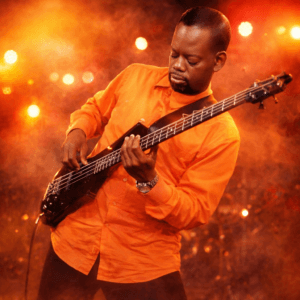
In 1991, Gode Lofombo joined Empire Bakuba, the iconic band led by the late Pepe Kallé (Kabasele Yampanya). This collaboration marked the period in which he gained widespread recognition. As the bassist during Pepe Kallé’s later years, Gode Lofombo helped shape the band’s sound with powerful, melodic bass lines that complemented Kallé’s commanding vocals and stage presence. His work with Empire Bakuba cemented his place in Congolese music history.
Challenges After Pepe Kallé’s Passing
Following the death of Pepe Kallé, Empire Bakuba experienced internal tensions, and like many members, Gode Lofombo faced professional uncertainty. Despite these challenges, his reputation as a dynamic performer and musical “maverick” remained intact. Fans and fellow musicians continued to recognize him as one of the most influential bassists of his generation, closely associated with the golden era of Empire Bakuba.
Collaborations with Major Congolese Artists
Beyond Empire Bakuba, Gode Lofombo’s career expanded through collaborations with some of the biggest names in Congolese music. He contributed bass, arrangements, or production to artists such as Lutumba Simaro (on the album Trahison), Madilu System (Frère Edouard, Pouvoir, Bonheur), Werrason (Intervention Rapide), and Defao Matumona, including the project Sokofere. These collaborations highlight his versatility across classic rumba, modern soukous, and evolving Lingala music styles.
Work with Other Bands and Projects
Gode Lofombo also worked with a wide range of artists including Aurlus Mabélé, Yondo Sister, Blaise Bula (Ponderation 8), and musicians from the Wenge Musica generation such as Marie Paul. His influence extended even into religious music through collaborations with artists like Abbé Makamba, proving his adaptability and broad musical reach within Congolese culture.
Founding Delta Force
In 1999, Gode Lofombo founded his own band, Delta Force, where he took on multiple roles as bassist, arranger, dancer, and bandleader. Delta Force allowed him to fully express his musical vision and leadership style. Through this project, he maintained a strong connection with rumba and soukous aficionados, reinforcing his identity as both a performer and innovator.
Popular Tracks and Recordings
Among his notable recordings with Delta Force is the song “Rama” (circa 2000), which continues to circulate on specialized rumba and soukous platforms. As a featured instrumentalist, Gode Lofombo also appears on compilations and curated playlists, including tracks such as “Zaiko Wawa Wa” on K2KSquare Vol.1. While bassists are often undercredited, these recordings highlight his unmistakable musical fingerprint.
Musical Style and Genres
Gode Lofombo’s style is deeply rooted in Congolese rumba, soukous, and Lingala music, yet it stands out for its innovation. His bass playing blends tight rhythmic drive with melodic expression, often functioning as a lead instrument rather than simple accompaniment. This approach earned him nicknames such as “Kamola Bass” and “Bendele ya Congo” (“the flag of Congo”), reflecting his role as a standard bearer for Congolese bass artistry.
Influence and Educational Impact
Beyond performance, Gode Lofombo has played a role in educating younger musicians, appearing in workshops and instructional videos that explain the foundations of Congolese rumba bass. His influence can be heard in modern bands inspired by Empire Bakuba, Wenge Musica, and contemporary rumba ensembles, many of which adopt his melodic and rhythmic approach to bass guitar.
Family and Cultural Roots
Gode Lofombo is also the younger brother of Shora Mbemba, creator of the famous Mandoundou dance, further linking him to Kinshasa’s vibrant dance-band tradition. This family connection underscores his deep cultural roots and explains his natural ability to combine music, dance, and performance into a unified artistic expression.
Conclusion: Gode Lofombo’s Lasting Legacy
Gode Lofombo remains a towering figure in Congolese music history, celebrated for his groundbreaking bass style, his work with Pepe Kallé and Empire Bakuba, and his enduring influence through Delta Force and countless collaborations. As a bassist, composer, and arranger, he helped redefine the sound of modern rumba and soukous. His legacy lives on not only in recordings and performances, but also in the generations of musicians who continue to draw inspiration from his innovative approach to Congolese bass guitar.